Author Archive

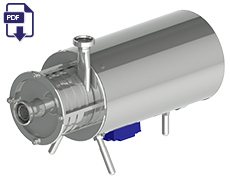
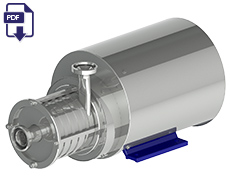
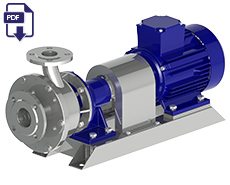
Centrifugal pumps Series 150

    • Центробежный насос, серия150

      Центробежни помпи Серия 150

    • ПРИМЕНЕНИЕ

      Транспорт на чисти, замърсени или агресивни течности, химически неактивни към материала, от който са изработени. Приложими в охладителни системи, пречиствателни съоръжения и други съоръжения със сходни процеси.
      • TЕХНИЧЕСКИЕ ПАРАМЕТРЫ
      • Подача: до 100 м3/ч
      • Напор: до 4 bar
      • Температура: до +95 (120) °C
      • Питание: дo 11.0 кВт, 380(440)В,
      • Скорость вращения: 50 (60) Гц
      • Материал: нержавеющая сталь AISI 304

PC150

PC150M1R

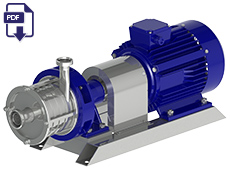
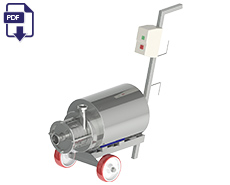
Centrifugal Multistage Pumps Series 170

  • Центробежный многоступенчатый насос

    Центробежный многоступенчатый насос, серия 170

  • ПРИМЕНЕНИЕ

    Предназначены для транспортировки жидкостей на тех этапах производства, где требуется малая производительность при высоком давлении перекачиваемой жидкости требующих низких скоростей потока при высоком давлении перекачиваемой жидкости. Возможность использования от 2 до 6 рабочих ступеней. Установлены рабочие колеса закрытого типа. Препятствует пенообразованию, идеален для таких продуктов, как соки, пиво, вино.
    • ТЕХНИЧЕСКИЕ ПАРАМЕТРЫ
    • Подача: до 10 м3 / ч
    • Напор: до 7 бар
    • Температура: до +95 (120) ° C
    • Установленная мощность: до 5,5 кВт, 380 (440) В
    • Частота вращения: 50 (60) Гц
    • Материал: нержавеющая сталь AISI 304
  • PC170

    PC170S

    PC170Se

    PC170M1R

    PC170B

    PC170K

VINIFICATOR VT

VT vinifikator is designed for making, storing white and red wine materials. Equipped with a floating lid, whose design does not allow the preserved wine material to oxidize, regardless of the amount of product in the tank.

Functions of the VT vinifier:

  • Temperature mode is maintained automatically
  • Ability to set the sequence of processes with the program

Base configuration:

  • Floating cover
  • Breather valve DN 50 30 m3/h
  • Pump with pressure gauge
  • Tether
  • Grip for portable ladder
  • Heat-exchange jacket H=500mm,
  • Level gauge
  • Sampling tap
  • Handrail for entering the bottom hatch
  • Elliptical hatch 310x 445mm
  • G1/2′ thermosensor socket
  • Manufacturer’s nameplate
  • Inlet/Outlet DN 50 with valve cock and plug nut
  • General outlet DN 50 with valve cock and plug nut

Optional equipment:

  • PVC or INOX process control panel
  • Heat-exchange jacket H=500mm, 750mm,1000mm THERMO METER
  • Thermal sensor
  • Decanter
  • Inert gas valve G1/2′
  • Washing head
  • CIP pipeline
  • Rectangular bottom hatch 410x530mm

Temperature Pauses in Brewing: How They Affect Beer Characteristics

Brewing is a complex multi-stage process in which not only the technological processes but also the intervals between them are important. Ensuring such pauses in the brewing process allows you to get a tasty, aromatic beer with a rich aftertaste. What pauses there are in brewing and what they are for, we will discuss below.

Features of temperature pauses

The influence of temperature pauses on the quality of the finished beverage is known to experienced winemakers. These are essentially time intervals when the temperature drops or rises to a certain level. The onset of these conditions activates the enzymes present in the malt, which break down the starch, also contained in the malt, into sugar compounds. The principle of temperature pauses follows the processes observed in nature during grain growth. Solar heat accelerates the growth and development of grains.

If we talk about the method of temperature pauses in simplified terms, the process boils down to getting certain sugars and changing the level of acidity in the wort. And in order for the dissolution of substances to take place, it is necessary to maintain a given water temperature and change it according to the pauses.

Temperature pauses are performed during the mashing of malt for beer. Technologically, this stage is considered to be one of the most complex, as the final result, flavour and physical properties of the beer depend on its progress. To prepare the wort, water is introduced into the container with malt and heated. In order for the enzymes to be activated, it is necessary to maintain certain temperature values and withstand the very interval to catalyse the process. How long to keep the mixture heated depends on the type of malt and the type of future beer.

  1. The acid pause lasts no more than 15 minutes (rarely longer) and the temperature is maintained at a maximum of 46 degrees centigrade. Under these conditions, phytase is activated, which is responsible for reducing the alkaline level. The second activates beta-glucanase, which makes the wort lighter in colour and allows it to be filtered quickly in the next stages.
  2. The protein break is optional. Why is the protein pause necessary? Proteinase and peptidase are synthesised: the former optimises conditions for yeast growth, the latter makes the liquid less viscous, allowing protein compounds to be broken down. To activate the enzymes, the temperature must be set to 60 degrees Celsius and maintained for half an hour.
  3. Dextrin pause is a mandatory stage. It is needed to convert starch compounds by beta-amylase and alpha-amylase. The breakdown of long protein chains leads to the formation of dextrins – sugars that are not subject to fermentation, which make the drink sweet, fuller. The upper limit of the temperature break should be no more than 72 degrees Celsius.
  4. The maltose break in brewing is necessary for the breakdown of starch into maltose by beta-amylase. Maltose is fermented rapidly and yeast is involved in the process. The maximum maltose concentration is reached at a temperature of 62.5 degrees Celsius.
  5. Diacetyl pause. The product of yeast functioning is diacetyl, which is processed, again, by yeast. The presence of the substance in the wort should be minimal. In order to achieve this, brewers advise a few days of maturation before the fermentation finishes, keeping the temperature at the upper level of the fermentation range.

You can buy brewing equipment with the help of INPROMINOX. The Bulgarian company offers a wide range of installations for small and medium-sized enterprises.

Non-enzymatic transformations of amino acids during wine aging

The formation of organoleptic properties of wine significantly depends on the presence of sugars, acids, tannins and coloring components in grape must – this is confirmed by centuries-old practice of wine making and theoretical studies of winemaking processes. But when tasting natural wines with the same composition and content of the above mentioned substances, it turns out that the taste and aroma of the two samples are very different. This proves that wine quality (including the bouquet) is determined by the composition and concentration of nitrogenous substances, which include proteins, peptides and amino acids. The latter, namely the influence of amino acids in wine on the physical and chemical properties of the beverage, will be discussed below.

Role of amino acids in wine production

Studies of winemaking technologies confirm that the quality of the finished wine is highly dependent on the amino acids present in the grape must. However, the nature of their transformation and the importance of their transformation products are still under debate.

  1. The researcher Ehrlich pointed out that fermentation produces higher alcohols that give wine special aromas – floral and fruity. On the other hand, wines made from grapes grown on humus soils are characterized by a high content of nitrogenous substances and have a coarse flavor. Accordingly, to improve wine quality, it is advisable to reduce the amount of amino acids. The dispute was settled by the works of E. Penno and S. Lafon-Lafourcade. Lafon-Lafourcade: according to the results of their research, yeast processing of amino acids leads to the formation of a large amount of syrupy oils and a small proportion of alcohols with an attractive odor.Another point of view on the importance of amino acids belongs to V.L. Kretovich and V.I. Nilov. According to it, deamination of amino acids occurs during fermentation, and yeast does not participate in this process. As a result, aldehyde, carbon dioxide and ammonia are formed. The by-products of the processes contribute to the enrichment of wine during aging, particularly madera and Tokay varieties. But it is worth noting that the resulting aromas harmonize with fortified wines, with little correspondence to the requirements for table and sparkling wines. Accordingly, the increase of nitrogenous substances in wine materials for preparation of table and sparkling wines is undesirable, which should be taken into account when applying new technologies in winemaking.

The catalog of INPROMINOX offers a wide range of equipment for winemaking: we have installations for medium-sized wineries and mechanisms for mini wineries.

The difference between grain beer and wort concentrate beer

Beer remains one of the most popular drinks all over the world. Its pleasant bitterness, velvety flavour, rich aftertaste and subtle aroma combine perfectly with traditional snacks and make the evening especially warm and hearty. As the rate of beer consumption grows, new brewing trends are emerging that differ from the traditional method. In this article we will compare the classic beer production technology and the production of a drink from malt wort concentrate.

How beer is produced in the traditional way

Let’s take a look at how beer is brewed in the authentic way.

  1. Malting. Harvested grain (barley, wheat, oats, rye) is soaked in water and spread out on the floor in a thin layer: after a few days, the grain germinates. After that, the sprouted grain is dried in a dryer or roasted, then crushed in a special crusher. The opening of the grain shell is required in order to extract the starch to produce a nutrient mass.
  2. The milled malt (coarser than the flour fraction) is loaded into a mash pot, where the crushed grain is mixed with water and the resulting mixture is heated to 40 degrees Celsius. The mashing ensures the release of natural enzymes from the malt, which accelerate the breakdown of starch into sugars. This stage takes a couple of hours. Important: mashing is done by infusion or decoction. In the first case, the grain is heated in one tank with water, in the second – part of the mash mixture is boiled separately and then added to the main mass. The output is a liquid of sugar and water – wort.
  3. Wort filtration in three stages – mash-out (heating), recirculation (separation of solids) and washing the pellet with warm water.
  4. Boiling for up to two hours.
  5. Adding hops – at the beginning or end of the brew.
  6. Vortex stirring, necessary to separate hop particles and protein compounds.
  7. Fermentation with the addition of yeast. How long does grain beer ferment? It all depends on the temperature: at 16-18 degrees, slow fermentation takes place for up to three weeks. If the fermentation temperature reaches 26 degrees, the wort ferments in a few days.
  8. Maturation – ageing of the product to develop a harmonious flavour and aroma. Dry hops may be performed during maturation.

After maturation, the beer is bottled and carbonated – either naturally or forcibly.

Technology of beer production from beer concentrate

The method of brewing beer from beer extract is often resorted to by beginners as well as homebrewers. Despite the differences from the classic technology, the use of beer concentrates makes it possible to prepare a tasty drink that is not inferior to good shop or craft beers.

In fact, the method is a simplified classical method, with the only condition that you can bypass a number of stages and do without expensive brewing equipment.

Concentrate is beer wort that has been hoped or not hoped. As a rule, the substance has a dark, rich colour and is dense. It is the same malt prepared at the factory and evaporated to a thick consistency. The viscous product is easier to transport and store. When you buy extract, it comes with yeast, hops (if the wort is not hoped) and brewing instructions. In this way the brewer does not need to calculate and select yeast. The technology includes the following steps:

  • Disinfecting the container;
  • Yeast Preparation;
  • Varku;
  • Fermentation;
  • Carbonation and aging.

The end result is a flavourful and tasty beer, not unlike that brewed using the classic method. In our blog you will find a lot of useful information: What is the best equipment for brewing grain beer? How to choose fermentation tanks.


34G, Maksim Raykovich str.

5140, Lyaskovets

Bulgaria

Phone: +359 87 788 80 90


CONNECT WITH US